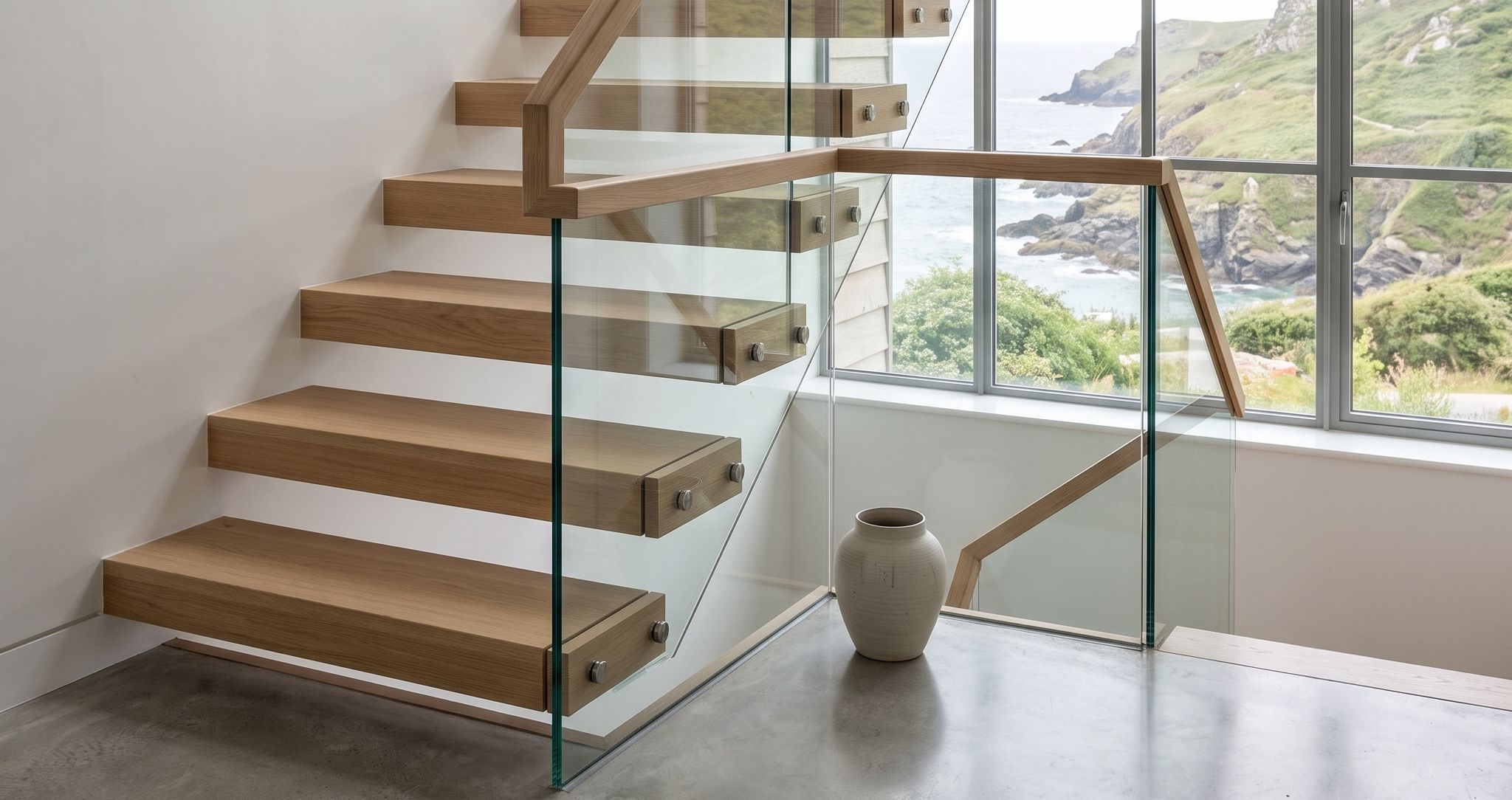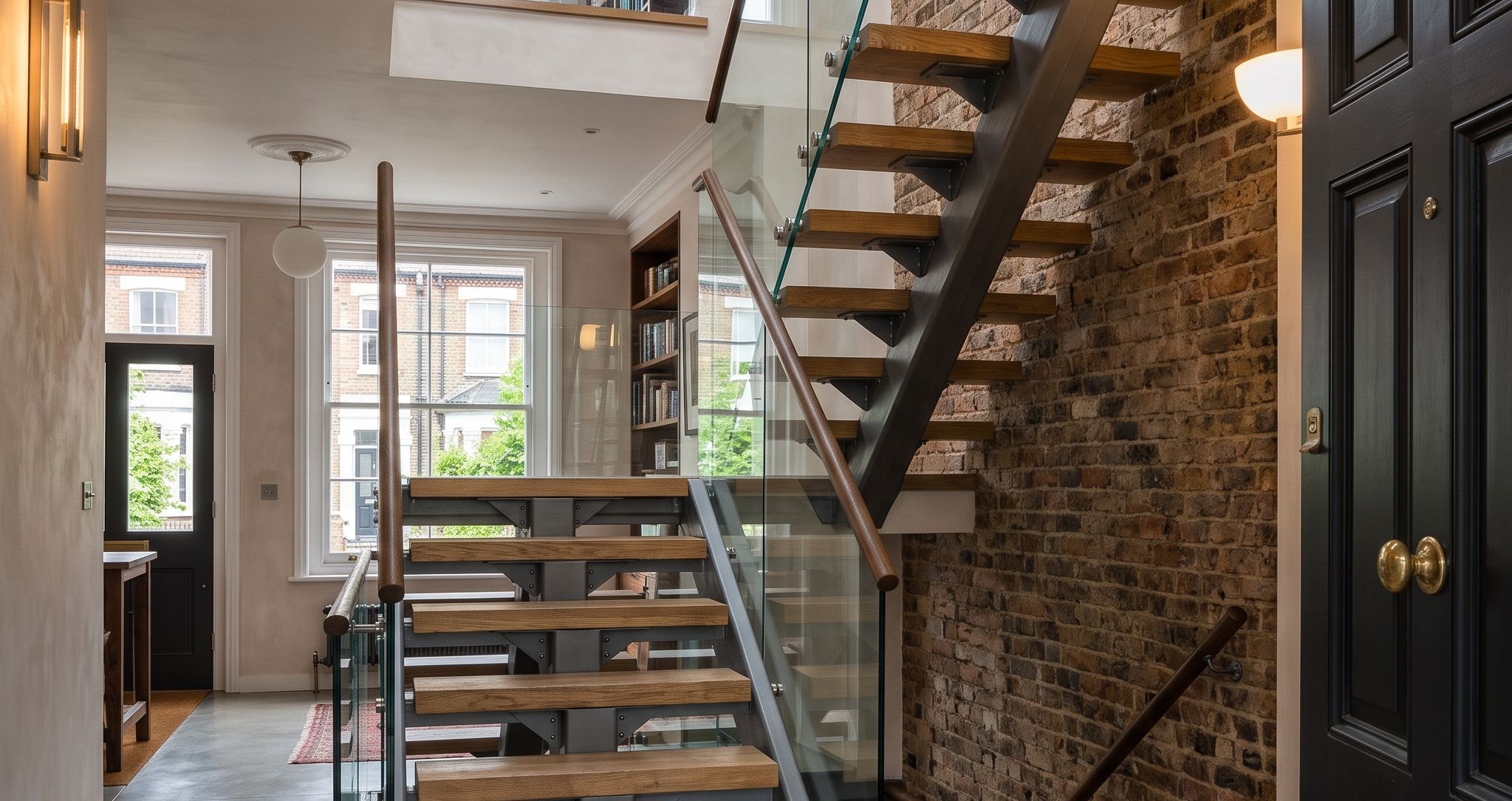
Outdoor floating stairs are cantilever staircases built for external use, engineered with weather-resistant materials such as galvanised or powder-coated steel, concrete and natural stone to withstand the UK climate. This architectural feature seamlessly bridges the gap between modern interior luxury and exterior landscape design, creating an illusion of weightless steps suspended in mid-air.
Whether you are seeking inspiring floating stairs outdoor design concepts for a tiered garden or preparing for a structural outdoor floating stairs installation on a luxury terrace, selecting the right materials and anchoring methods is crucial for multi-decade durability.
What Are Outdoor Floating Stairs?
Unlike standard garden steps that sit heavily on piled soil, outdoor floating stairs rely on an engineered cantilever system. Each individual tread extends horizontally from a hidden structural wall or reinforced concrete spine, creating an open-riser look that allows light, wind, and rain to pass through freely.
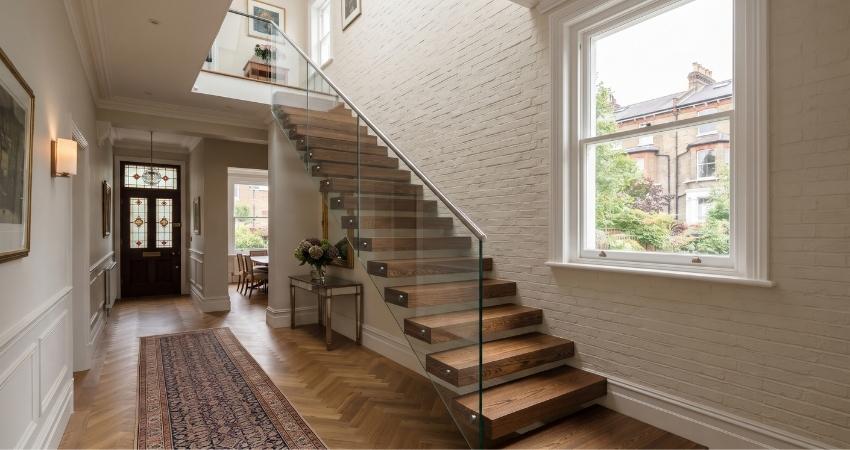
How Outdoor Floating Stairs Differ from Indoor Designs
While indoor cantilever stairs focus purely on structural load-bearing and aesthetics, external versions must fight environmental elements. They require specialized engineering to handle frost expansion, continuous rainwater drainage, UV exposure, and shifting ground foundations. Additionally, slip resistance becomes a non-negotiable legal safety factor outdoors.
Floating Stairs Outdoor Design Ideas
Integrating cantilevered steps into your exterior layout elevates the overall architectural value of a property. Here are the most prominent design configurations used by high-end landscape architects in the UK:
Garden and Landscape Floating Steps
For sloped gardens or multi-tiered lawns, floating steps can be integrated into stone gabion walls or reinforced concrete retaining structures. This design makes the staircase look as if it is naturally emerging from the landscape, keeping the garden layout looking spacious and uncluttered.
Floating Stairs for Terraces and Decks
Connecting an elevated patio or first-floor balcony to a ground-level deck requires a sleek architectural transition. A steel-frame floating staircase with open risers ensures that views across the garden are not blocked by a heavy, traditional wooden or brick structure.
Lighting and Finishing Touches
To maximize both safety and visual drama at night, low-voltage, waterproof LED strip lights (IP67-rated) can be recessed into the underside of each tread. This illuminates the step below, accentuates the floating effect, and ensures safe footing after dark.
Concrete Floating Stairs Construction for Outdoor Use
When it comes to external durability, concrete is one of the most reliable choices for a minimalist, raw architectural aesthetic.
Outdoor concrete cantilever anchoring method, from the ground up:
- Reinforced ground foundation
- Hidden cast-in-place concrete retaining wall
- Heavy-duty rebar matrix
- Projecting concrete tread
Why Concrete Suits Outdoor Floating Stairs
Reinforced concrete is highly resistant to the UK's freeze-thaw cycles. It does not rot like timber, nor does it rust when exposed to constant moisture. Furthermore, it offers massive structural mass, which eliminates any microscopic bounce or vibration when walking up the steps.
The Cantilever Anchoring Method
The construction relies on a cast-in-place concrete retaining wall hidden behind the architectural finish. A heavy-duty rebar matrix is tied inside the wall formwork, extending outwards into the forms for each individual tread. Once the high-grade concrete is poured and cured, the wall and the steps become a single, monolithic, indestructible structure.
Foundations and Structural Support
Because the ground shifts due to moisture and frost, outdoor cantilever walls require a deep, reinforced concrete strip foundation below the frost line. Without this engineering foundation, the leverage weight of the projecting steps could cause the retaining wall to tilt or crack over time.
Weather-Resistant Materials for UK Conditions
To ensure your external staircase survives decades of British downpours and winter frosts, material selection must prioritize corrosion resistance and durability.
Galvanised and Powder-Coated Steel
If you opt for a metal structural frame, the steel must undergo a hot-dip galvanisation process to coat it in a rust-proof zinc layer. For a premium architectural finish, a marine-grade powder coating can be applied over the galvanised steel in popular contemporary shades like Anthracite Grey (RAL 7016).
Natural Stone and Anti-Slip Treads
Cladding your steel or concrete cores in natural stone provides a luxury timeless look. Materials like textured granite, basalt, or bush-hammered limestone are ideal. They resist frost damage and naturally provide the rough surface texture needed to prevent slips when wet.
Drainage, Safety and UK Building Regulations
External structures face strict scrutiny under UK Building Regulations to prevent accidents in wet or icy conditions.
Slip Resistance and Outdoor Stair Safety
Under British Standards, outdoor stair treads must have an anti-slip surface rating (typically a minimum PTV/SRV score of 36+ in wet conditions). This is achieved through acid-etched finishes, sandblasted textures, or integrated anti-slip grooved inserts near the nose of each step. Furthermore, every tread must have a subtle forward fall (a 1:100 slope) to prevent rainwater from pooling on the surface and forming dangerous ice patches in winter.
Frequently Asked Questions
What are outdoor floating stairs?
Outdoor floating stairs are cantilevered external staircases where each tread is supported from a single hidden structural wall, creating an open, modern design that allows light and water to pass through.
Are concrete floating stairs good for outdoors?
Yes, reinforced concrete is one of the best choices for outdoor cantilever installations. It is immune to rot, handles the UK's freeze-thaw cycles perfectly, and provides an incredibly solid, vibration-free structure.
Do outdoor floating stairs need building regulations approval?
Yes. Any external staircase in the UK that serves as a main entrance or has a total drop of more than 600mm must comply with Building Regulations Part K regarding handrail heights, slip resistance, and opening gaps.
What materials last longest outdoors?
Hot-dip galvanised structural steel, marine-grade powder-coated frames, reinforced concrete, and natural stones like granite or basalt offer the longest lifespans against harsh weather conditions.