Wooden staircase design covers the selection of timber species, tread profiles, balustrade styles and finishes used to create stair designs ranging from traditional oak flights to contemporary timber-and-steel hybrids. As a natural material, wood brings unmatched organic warmth and structural versatility to interior architecture, making it the premier choice for both period property restorations and ultra-modern renovations across the UK.
When brainstorming new wooden staircase ideas, exploring how different wood species and material combinations influence both the structural longevity and the visual impact of your home is essential.
Why Choose a Wooden Staircase?
Timber has remained the bedrock of residential stair building for centuries, and its appeal only grows stronger with contemporary engineering.
Warmth, Versatility and Longevity
Unlike concrete or cold metals, wood possesses a natural grain texture that introduces visual warmth to an entrance hallway. It is highly versatile; a single timber flight can be carved into intricate traditional spindles or cut into sharp, minimalist geometric blocks. When treated with high-quality oils or lacquers, a premium hardwood structure can easily last for generations, developing a beautiful character over time.
Wood Species for Staircase Design
The foundation of exceptional wooden staircase design relies heavily on selecting the correct timber species. The choice dictates the durability, grain pattern, and color profile of the installation.
Oak: The UK Favourite
European Oak remains the undisputed gold standard for British homes. It is a dense, hard-wearing timber with a distinct, prominent grain pattern that resists heavy foot traffic and daily wear. Oak responds beautifully to various stains, allowing architects to finish it in anything from pale Nordic whites to deep, smoky dark tones.
Walnut, Ash and Other Hardwoods
- American Black Walnut: A luxurious, dark hardwood featuring deep chocolate tones and rich, sweeping grain swirls. Ideal for high-end, dramatic statement staircases.
- Ash: A tough, impact-resistant hardwood with a pale, creamy color and a highly defined grain. Perfect for bright, light-filled modern interiors.
Engineered Timber vs Solid Wood
While solid wood is magnificent for visible structural elements like handrails and outer strings, engineered timber is highly recommended for individual treads. Engineered timber consists of a real hardwood surface layer bonded to multiple cross-directional layers of plywood beneath. This technical structure prevents the wood from warping, cupping, or splitting when exposed to shifting humidity levels in British homes.
Wooden Staircase Design Ideas
The aesthetic direction of your staircase should complement the overarching interior theme of your property.
Traditional Wooden Staircase Styles
Classic British homes often utilize closed-riser layouts featuring heavy oak newel posts, decorative turned spindles, and elegantly curved continuous handrails. These styles celebrate craftsmanship and bring a sense of historical permanence to Victorian, Edwardian, and Georgian hallways.
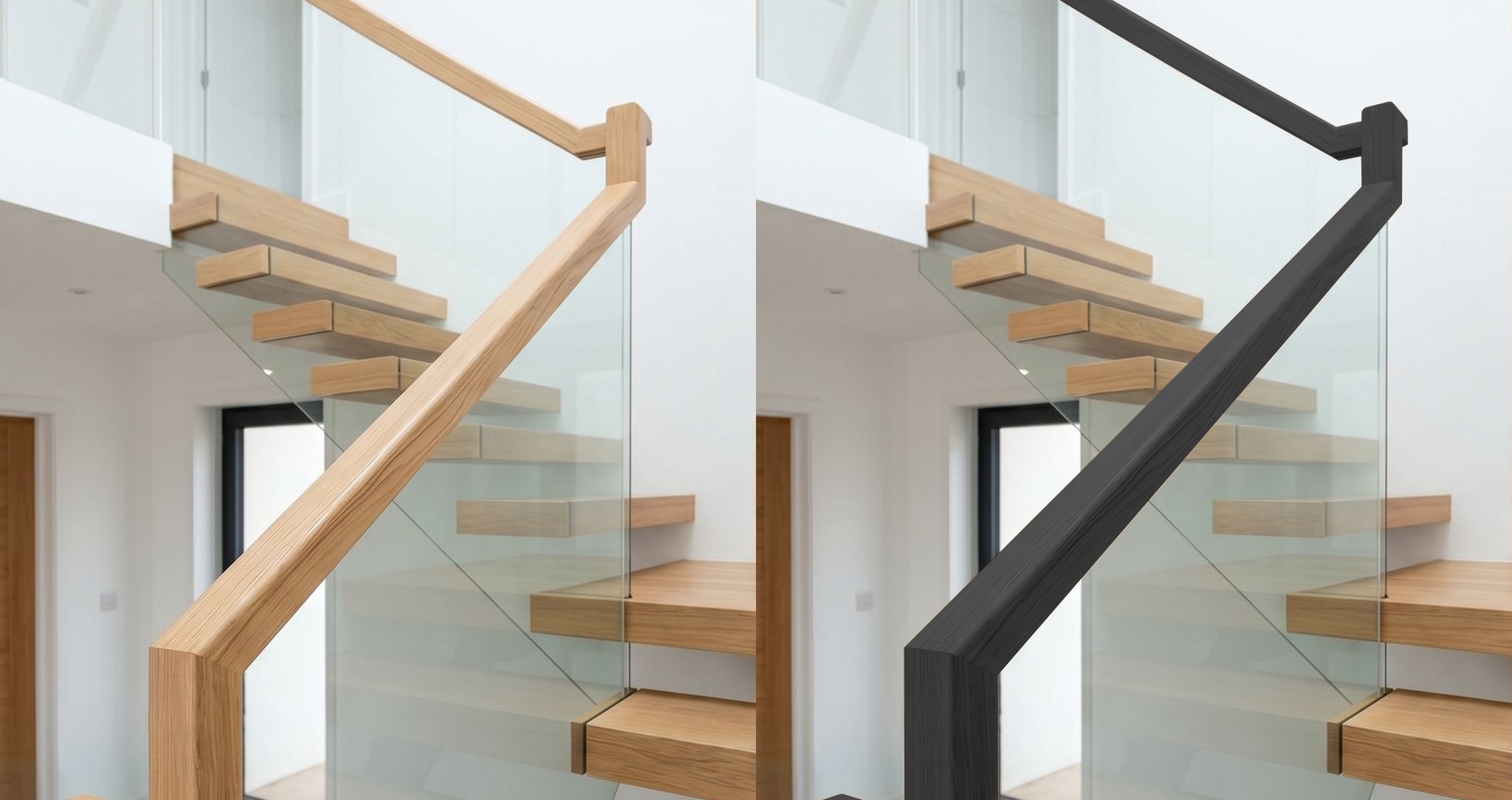
Modern Wood and Steel Hybrid Designs
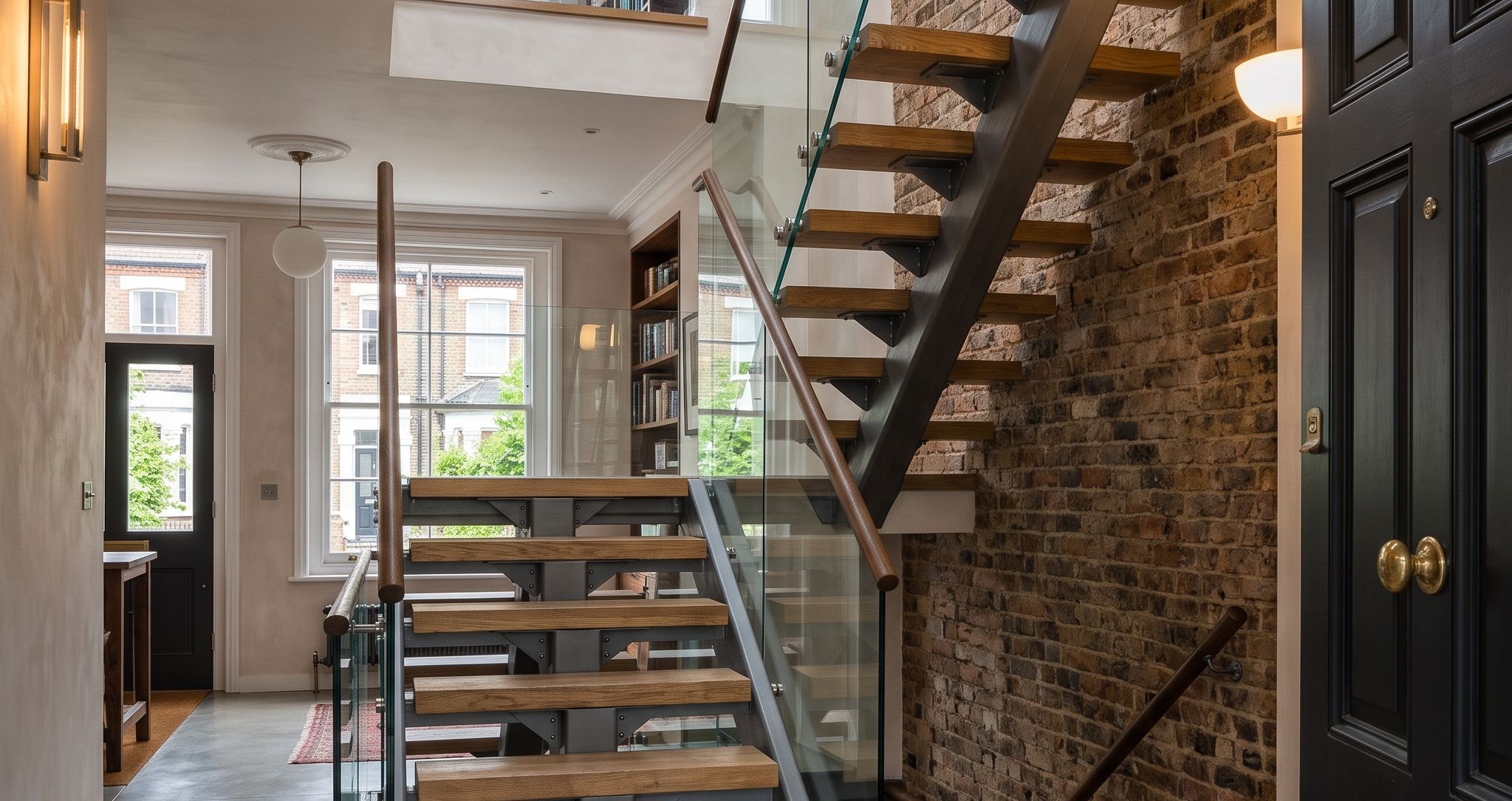
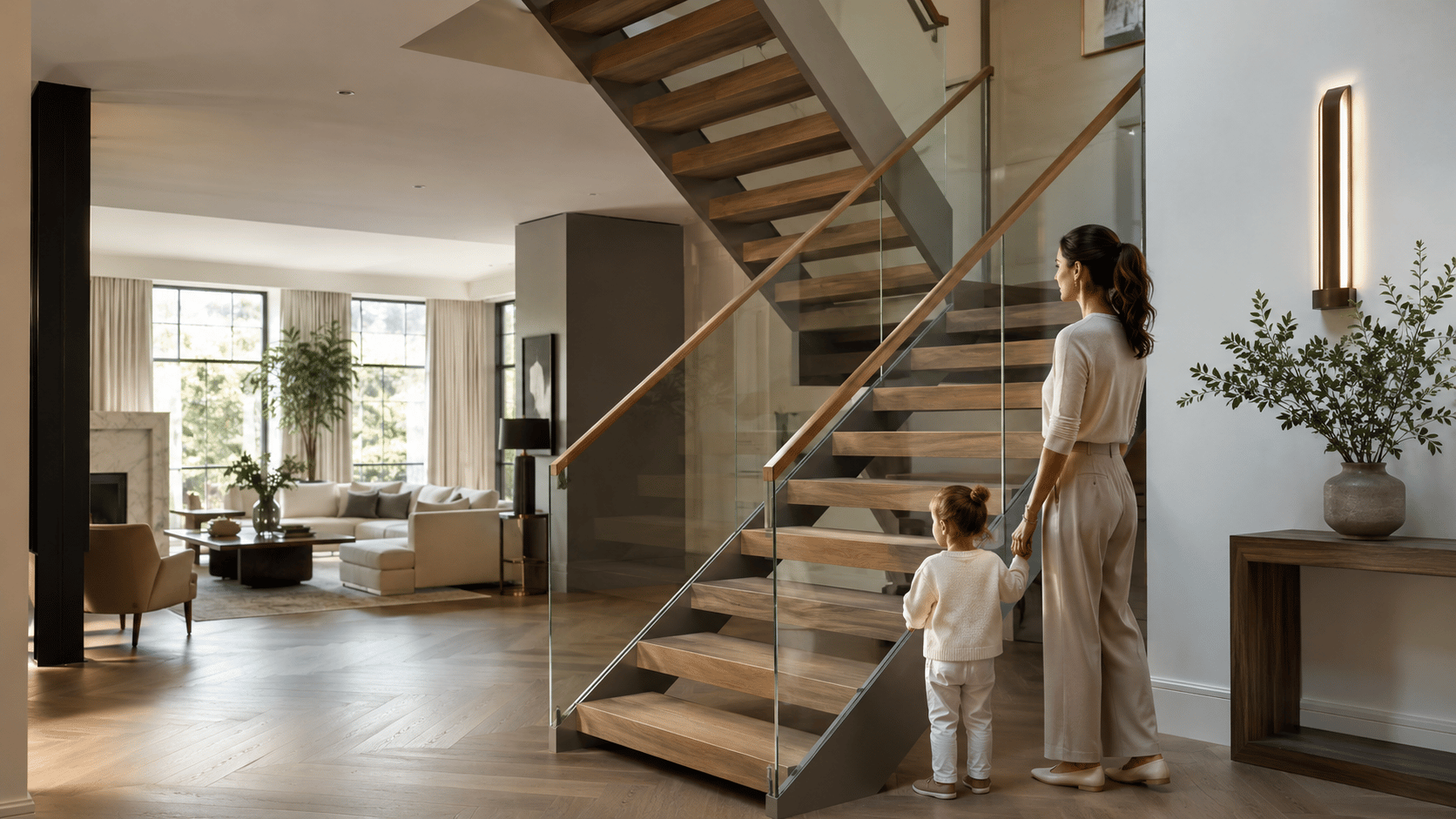
For contemporary architectural projects, pairing thick hardwood treads with architectural metals is a major trend. Combining natural timber with powder-coated black steel structures creates a striking industrial-chic aesthetic that feels grounded yet visually lightweight.
Wood Panelled Staircases
Integrating wood panelling along the flanking wall of a staircase is an excellent way to add depth and architectural texture. Whether opting for classic shaker-style squares or modern vertical timber slats, panelling frames the staircase, turning the entire zone into a cohesive design feature.
Pairing Wood with Glass and Steel
Modern luxury architecture thrives on material contrast. Wood provides the tactile warmth, while glass and steel deliver the minimalist transparency.
Oak Treads on a Steel Floating Frame
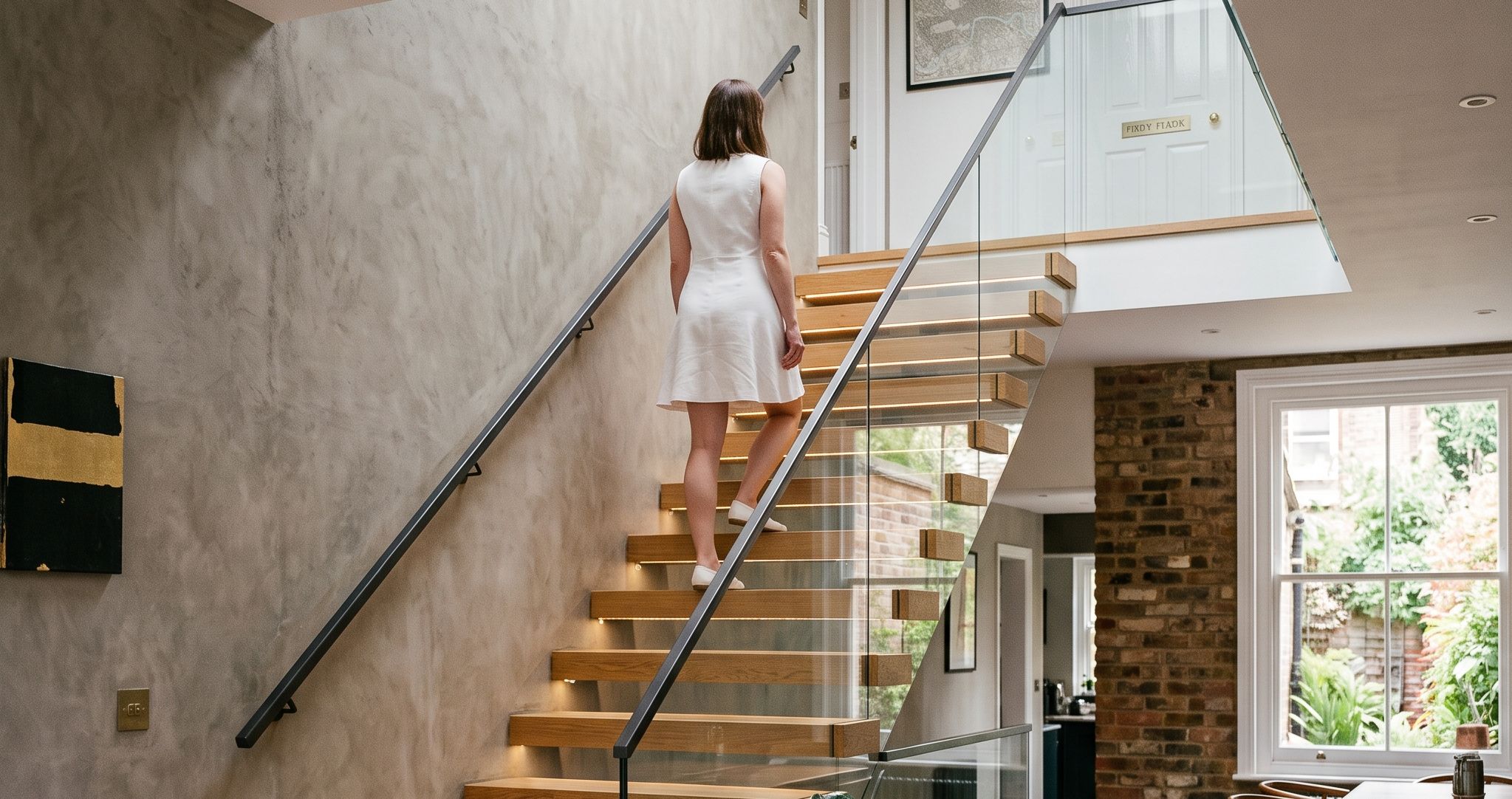
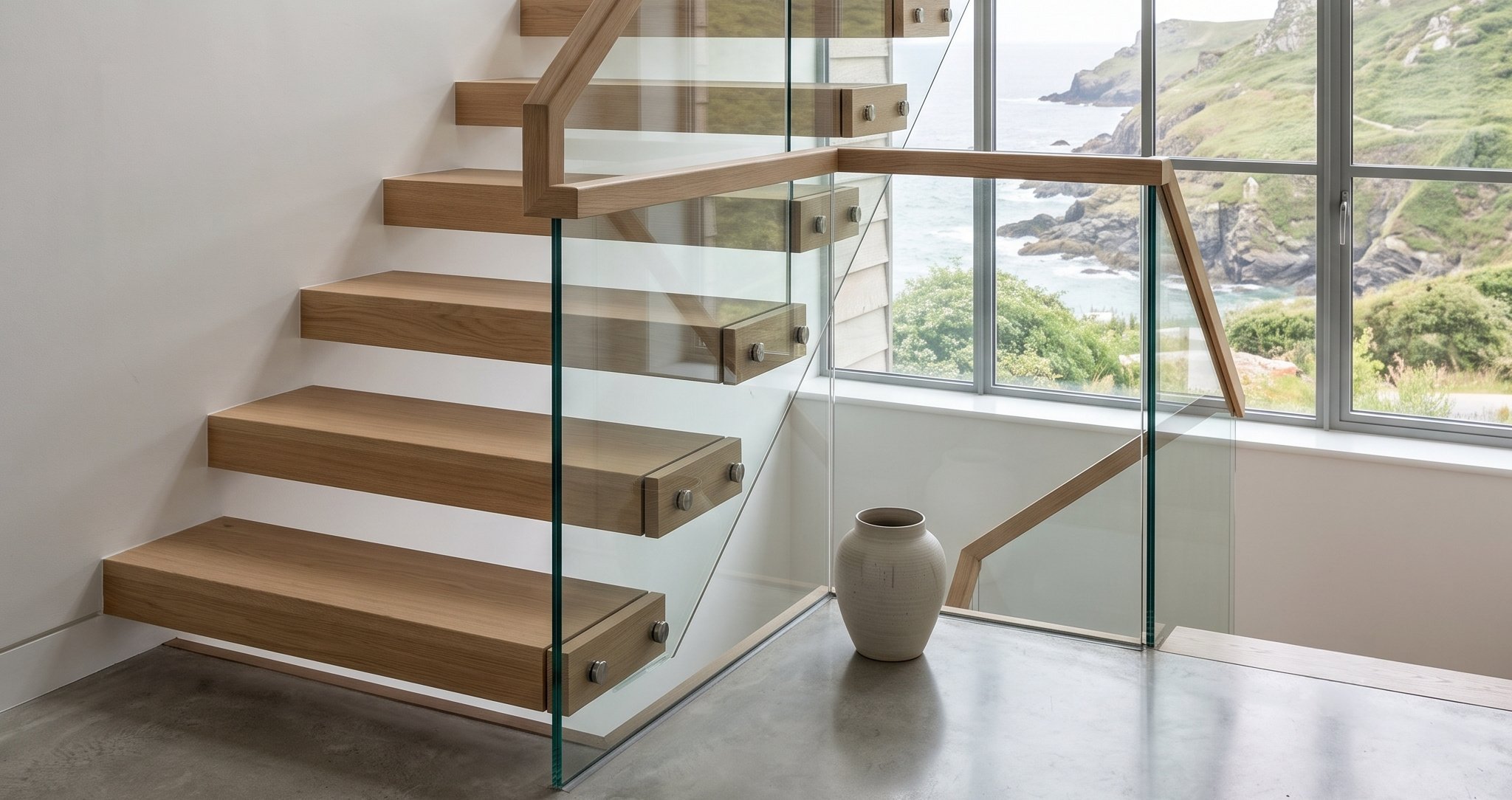
One of the most sought-after wooden staircase ideas involves mounting thick, solid oak treads onto a hidden steel cantilever frame or a central mono-stringer. The raw strength of the hidden steel allows the warm oak blocks to float effortlessly in mid-air. When paired with a structural glass balustrade, light can flood through the open risers, transforming a dark hallway into a bright, welcoming space.
Caring for a Wooden Staircase
To preserve the structural integrity and surface beauty of timber surfaces, proper initial sealing and routine maintenance are required.
Oiling, Sealing and Long-Term Maintenance
High-traffic timber steps should be sealed with a commercial-grade polyurethane lacquer or a hardwax oil (such as Osmo Polyx-Oil). Lacquers provide a hard, protective shell that blocks moisture, while hardwax oils penetrate deep into the wood fibers, allowing for easy spot repairs if scratches occur without needing to sand the entire flight.
Frequently Asked Questions
What is the best wood for a staircase?
European Oak is widely considered the best wood for a staircase due to its ideal balance of density, structural strength, beautiful grain pattern, and long-term durability against daily foot traffic.
Are wooden staircases durable?
Yes, premium hardwoods like oak, walnut, and ash are incredibly durable. When engineered correctly and sealed with a high-quality finish, a wooden staircase can easily last for over a century.
Can you combine wood with a steel staircase?
Absolutely. Combining thick timber treads with structural steel frames (such as mono-stringers or floating structures) is one of the most popular modern architectural trends, blending industrial strength with organic warmth.
How do you maintain a wooden staircase?
Routine maintenance involves regular sweeping and wiping with a damp cloth using wood-specific cleaners. Depending on the traffic, re-applying a fresh layer of hardwax oil every few years will keep the timber nourished and scratch-resistant.